
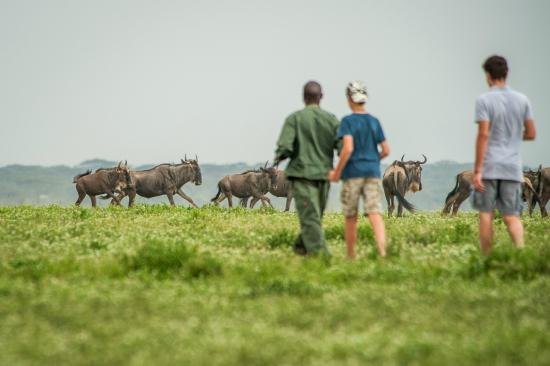
A walking safari in Tanzania gives you the chance to experience the African wilderness in a completely different way. Instead of watching wildlife from inside a safari vehicle, you explore the bush on foot with a professional guide and, where required, an armed park ranger.
Walking changes the entire safari experience. You begin noticing animal tracks, plants, insects, birds, scents and sounds that are easy to miss during a game drive. Even when there are no large animals nearby, the bush feels alive.
For travelers who want more than simply photographing wildlife from a vehicle, a walking safari can become one of the most memorable parts of a Tanzania safari.
What Is a Walking Safari in Tanzania?
A walking safari is a guided wildlife experience conducted on foot inside or around designated wildlife areas.
Depending on the location, walks can range from a relaxed one- or two-hour nature walk to a longer wilderness experience lasting several hours.
Your guide explains how to identify animal tracks, recognize plants, understand wildlife behavior and interpret signs left behind by animals.
Walking safaris are never about approaching dangerous animals as closely as possible. The purpose is to experience the ecosystem safely while learning how animals, plants and people are connected.
What Does a Walking Safari Feel Like?
The biggest difference is the sense of awareness.
Inside a safari vehicle, animals often become comfortable with the presence of the vehicle. On foot, the experience feels much more natural and personal.
You may hear birds calling before you see them, notice fresh elephant tracks across the trail or discover where a hyena passed during the night.
Your guide may stop to explain medicinal plants, termite mounds, animal dung, footprints or the way different species communicate.
The experience is slower than a normal game drive, but that is exactly what makes it special.
You are not rushing from one wildlife sighting to another. You are learning how to read the African bush.
Where Can You Do a Walking Safari in Tanzania?
Walking safaris are available in several wildlife areas across Tanzania, although regulations and walking zones vary between parks.
Arusha National Park
Arusha National Park is one of the easiest places to include a walking safari, particularly for travelers beginning or ending their safari in Arusha.
Walking experiences are normally accompanied by an armed ranger.
The park is especially beautiful for seeing giraffes, buffalo, monkeys, antelope and birdlife against the scenery of Mount Meru.
It is also an excellent option for travelers who want a short walking safari without changing their main safari itinerary.
Tarangire National Park
Tarangire is famous for elephants, ancient baobab trees and beautiful open landscapes.
Selected walking experiences can be arranged in permitted areas, giving travelers an opportunity to explore the ecosystem beyond the normal safari roads.
Walking through the Tarangire landscape allows you to appreciate the enormous baobab trees, animal tracks and smaller wildlife that are often overlooked during game drives.
Ngorongoro Area
The Ngorongoro Conservation Area offers several interesting walking possibilities outside the main crater game-drive experience.
Depending on the itinerary and permissions, walks can explore highland landscapes, crater rims, Maasai areas and other designated zones.
These experiences combine scenery, culture and nature rather than focusing only on large wildlife.
Serengeti
Walking safaris in the Serengeti are much more controlled than normal game drives.
They are generally available only in designated areas and must follow park regulations.
Where available, walking in the Serengeti provides an extraordinary sense of wilderness because you experience the vast landscape without the protection and elevation of a safari vehicle.
For travelers specifically interested in a Serengeti walking experience, it should normally be arranged in advance.
Nyerere and Other Wilderness Areas
Southern Tanzania also offers excellent opportunities for walking safaris.
Large wilderness areas can provide a very different experience from the busy northern safari circuit, particularly for travelers looking for fewer vehicles and a stronger feeling of remoteness.
Walking experiences vary considerably depending on the camp, reserve and season.
What Animals Can You See?
Wildlife sightings on a walking safari cannot be guaranteed.
You may encounter giraffes, zebras, antelope, warthogs, buffalo, monkeys and many different bird species depending on the location.
Elephants and other large animals may sometimes be seen from a safe distance.
However, walking safaris are not designed around chasing the Big Five.
Some of the most interesting discoveries may be things you would normally drive past without noticing.
Your guide might show you:
- Fresh lion, elephant or hyena tracks
- Animal bones and skulls
- Termite colonies
- Medicinal plants
- Bird nests
- Animal droppings
- Insects and reptiles
- Different types of trees and grasses
These details help you understand how the entire ecosystem works.
Is a Walking Safari Safe?
Walking safaris in Tanzania are conducted according to the regulations of the wildlife area where the activity takes place.
In national parks and other designated areas, travelers may be accompanied by trained guides and armed wildlife rangers.
Before beginning the walk, your guide will normally give you a safety briefing.
You should always follow the instructions of your guide.
This includes staying with the group, avoiding sudden movements, keeping your voice low and never approaching wildlife independently.
Wild animals are unpredictable, which is why the decisions of your guide and ranger must always take priority.
What Happens if You Encounter a Dangerous Animal?
Professional guides are trained to read animal behavior and avoid unnecessary confrontation.
Most wildlife will detect people long before people detect the animals.
Your guide may change direction, stop the group or wait depending on the situation.
If an elephant, buffalo or predator is nearby, the guide will decide whether it is safe to continue.
Never run unless your guide specifically instructs you to do so.
The safest approach is always to remain calm and follow instructions.
How Long Does a Walking Safari Take?
The duration depends on the location and type of experience.
A typical walking safari may last approximately one to three hours.
Longer wilderness walks can sometimes take several hours.
For most first-time safari travelers, a two-hour walk combined with normal game drives provides a good balance.
Walking safaris are often scheduled early in the morning or later in the afternoon when temperatures are cooler and wildlife is more active.
What Should You Wear?
Comfort is more important than fashion.
Wear lightweight clothing in natural colors such as brown, khaki, beige, olive or grey.
Avoid very bright colors where possible.
Comfortable closed walking shoes are strongly recommended.
You should also bring:
- Hat or cap
- Sunscreen
- Sunglasses
- Drinking water
- Small backpack
- Insect repellent
- Light long trousers
- Camera or binoculars
During cooler months or early mornings, a light jacket can also be useful.
Who Should Do a Walking Safari?
Walking safaris are especially good for travelers who enjoy nature, photography, birdwatching and learning about ecosystems.
They are also excellent for people who have already done several game drives and want a different perspective.
Couples, small groups and families with older children often enjoy them.
However, age restrictions can apply depending on the national park, reserve, walking area and operator.
Travelers with mobility problems should also discuss the terrain and walking distance before booking.
Walking Safari vs Game Drive
You should not think of a walking safari as a replacement for a game drive.
The two experiences complement each other.
Game drives allow you to cover large distances and find animals such as lions, elephants, cheetahs and leopards.
Walking safaris allow you to slow down and understand the smaller details of the ecosystem.
The strongest Tanzania safari itineraries often combine both.
Spend part of your day searching for wildlife by Land Cruiser, then experience the landscape on foot where regulations allow.
When Is the Best Time for a Walking Safari?
Walking safaris can be arranged during many months of the year, depending on the destination.
The dry season generally provides easier walking conditions because vegetation is lower and trails are less muddy.
However, the green season can be spectacular for birdlife, flowers, scenery and photography.
The best month depends more on where you are walking than on Tanzania as a whole.
We normally match the walking experience with your safari route instead of forcing travelers to travel long distances simply to add one activity.
Can I Add a Walking Safari to My Tanzania Safari?
Yes.
A walking safari can usually be added to a larger Tanzania itinerary when the route, park regulations and timing allow.
For example, travelers visiting Arusha National Park can combine a walking safari with a game drive.
In other destinations, the walk may be arranged from a particular lodge or camp.
Because availability and regulations differ between wildlife areas, it is better to plan the activity while building your safari itinerary.
Walking Safari With Mnava Safaris
At Mnava Tours and Safaris, we can include walking experiences as part of a private Tanzania safari rather than treating them as a completely separate trip.
We look at where you are already traveling, how much time you have and what type of experience you want.
If you want a gentle nature walk, we can recommend the most practical option.
If you are looking for something more adventurous, we can design your route around locations where stronger wilderness experiences are possible.
Our goal is simple: the walking safari should improve your itinerary, not make it unnecessarily complicated.
Add a Walking Safari to Your Tanzania Adventure
A walking safari gives you something that even the best safari vehicle cannot provide: the feeling of standing inside the African wilderness rather than simply driving through it.
You hear more.
You notice more.
You understand more.
And once you have followed fresh animal tracks through the bush with an experienced guide, you begin looking at Tanzania’s wildlife differently.
Planning a Tanzania safari? Ask us to include a walking safari in your itinerary and we will recommend the best location based on your route, travel dates and interests.
Add This to Your Itinerary
Interested in adding Walking Safari in Tanzania to your Tanzania trip?
Choose a travel period if you know it, then continue to the existing Design Your Safari form.