
Mountain Overview
What Is Mount Kilimanjaro?
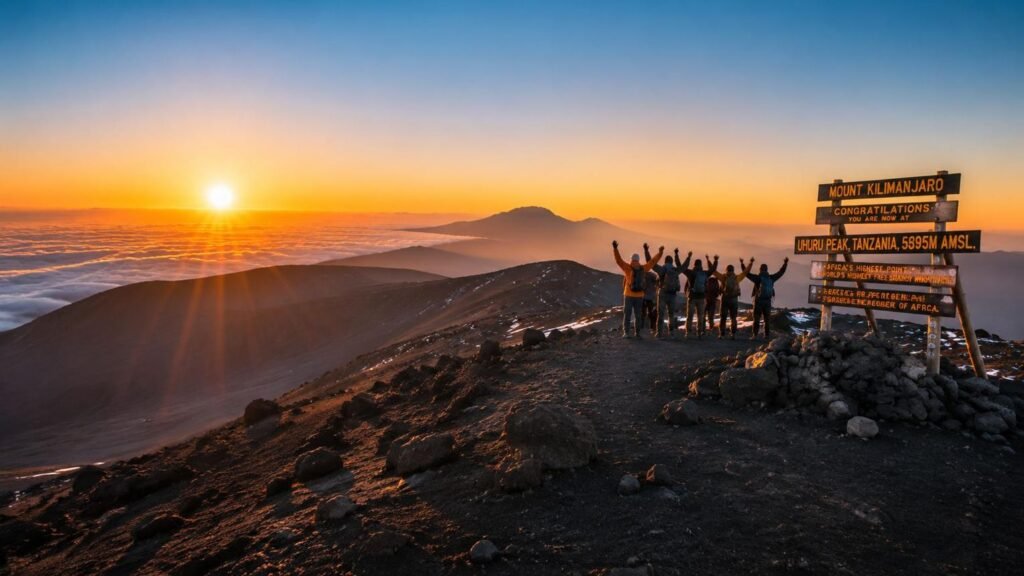
Mount Kilimanjaro rises in northern Tanzania and reaches 5,895 m / 19,341 ft at Uhuru Peak. The mountain is a volcanic massif and the normal trekking routes are high-altitude walking routes rather than technical mountaineering climbs for most of their length.
That does not make the climb easy. Altitude, consecutive trekking days, cold conditions and a long summit attempt can make Kilimanjaro physically and mentally demanding. A sensible itinerary, realistic preparation and time to acclimatize matter.
Key Facts
Mount Kilimanjaro at a Glance
Mountain Environment
From Forest to the Summit
A Kilimanjaro ascent moves through dramatically different environments. Lower cultivated slopes give way to montane rainforest, then heather and moorland, alpine desert and the cold high-altitude summit environment.
Lower Slopes
Warmer cultivated areas around the mountain form the transition to the protected climbing routes.
Rainforest
Humid forest can bring mud and rain, with dense vegetation and noticeably different temperatures from the upper mountain.
Heather & Moorland
Vegetation becomes lower and more open as climbers gain altitude and the landscape broadens.
Alpine Desert
Conditions become drier, barer and more exposed, with larger day-to-night temperature swings.
Summit Environment
The upper mountain is cold, exposed and high enough that altitude becomes the defining challenge.
Seasons
Best Time to Climb Mount Kilimanjaro
Climbers often favor the generally drier windows around late December to early March and mid-year through October. Wetter periods can still be climbed, but rain, cloud, mud and reduced visibility are more likely. Conditions high on Kilimanjaro can change quickly in every month, so no date guarantees good weather.
Crowd levels also vary. Popular dry-season dates may bring more people to established routes, while wetter or shoulder periods can be quieter. Your route, itinerary length and preparation are just as important as the month you choose.
Route Choice
Choose Your Kilimanjaro Route
Machame, Lemosho, Marangu, Rongai, Umbwe and the Northern Circuit are among the route names travelers commonly encounter. Mnava does not create a package simply because a route name is well known: the live options below come only from routes actually published in the Kilimanjaro Climbs system.
When comparing routes, look at the number of climbing days, the saved difficulty guidance, total distance and the itinerary’s acclimatization profile rather than relying on a single “best route” label.
Climbing Programs These routes are loaded directly from Mnava’s published Kilimanjaro climbing packages, so route facts and prices stay connected to the package itself. There are no published Kilimanjaro climbing routes at the moment. Contact us and we can help plan your climb.Our Mount Kilimanjaro Climbs
Our climbing programs are being updated.
Preparation
How Hard Is It to Climb Kilimanjaro?
The standard trekking routes are generally approached as non-technical hikes, but the physical challenge is significant. Altitude, multiple days of walking, cold, fatigue and a long summit night all add up. Technical climbing ability and high-altitude endurance are different things: not needing ropes for a normal route does not make the mountain easy.
How Should I Train?
Build a steady base with regular walking or hiking, cardiovascular conditioning, hills or stairs, leg endurance and progressively longer days on your feet. Practice carrying the daypack you expect to use and allow adequate recovery between harder sessions.
Fitness helps you cope with sustained trekking, but it does not determine how your body will respond to altitude.
High Altitude
Altitude & Acclimatization
Acclimatization is the body’s gradual adjustment to lower oxygen availability as elevation increases. Slower ascents and longer itineraries can provide more time for that adjustment, and some routes use a “climb high, sleep low” pattern where the terrain allows.
Hydration, rest, a realistic pace and honest communication with your guides are important. If you develop symptoms, report them rather than trying to hide them to stay on schedule.
Safety
Altitude and Safety
Acute Mountain Sickness can affect climbers at high altitude. Symptoms can range from mild to serious, and severe or worsening symptoms require appropriate guide decisions, descent and medical attention where necessary.
Mnava route pages list their route-specific services and inclusions individually. Review the selected route’s Climbing Cost Includes, Climbing Cost Excludes and Important Information sections for the exact equipment and support stated for that package; this guide does not add global promises that are not saved on the route.
Packing
What to Pack for Kilimanjaro
A practical packing system needs to cover warm lower slopes, rain, cold nights and the summit environment. Your final route information should take priority, but the main categories usually include:
- Base layers and insulating layers
- Waterproof shell
- Trekking trousers
- Well-broken-in boots
- Warm and trekking socks
- Gloves and warm hat
- Sun protection
- Daypack
- Water carrying system
- Headlamp
- Sleeping equipment appropriate to your package
- Personal medication
- Trekking poles if you use them
Arrival Planning
Getting to Kilimanjaro
Kilimanjaro International Airport (JRO) is the main international gateway associated with the mountain, while Arusha and Moshi are common staging areas for climbing trips. Build enough time into your arrival plan to recover from travel, organize equipment and handle any final briefing or transfer arrangements before starting the climb.
Airline schedules and fares change, so confirm current flight options separately rather than relying on a static airline list.
Beyond the Mountain
Before and After the Climb
A Kilimanjaro climb can be planned as a standalone mountain journey or combined with other Tanzania travel. Depending on your time and interests, you can continue with a safari, visit national parks, add selected Mnava experiences or spend time on Zanzibar.
Those additions should be planned from real Mnava Tours, National Parks and Experiences rather than from invented “combo packages.”
Budget Planning
How Much Does It Cost to Climb Kilimanjaro?
Kilimanjaro prices vary because routes and service levels vary. Important cost drivers can include route length, group or private arrangements where offered, park fees, staffing, accommodation, transfers, equipment or support services and the season.
Mnava does not publish a generic competitor price range on this guide. The live starting prices shown in Our Mount Kilimanjaro Climbs come directly from each published route’s structured pricing data.
What’s Included and Excluded?
Inclusions are route-specific. Open the individual route you are considering to see its current Climbing Cost Includes and Climbing Cost Excludes lists. This avoids maintaining a second global list that could contradict the package you book.
On the Mountain
Responsible Climbing
Respect mountain regulations, follow your guide’s instructions, minimize waste, treat the climbing crew respectfully and avoid leaving unnecessary material on the trail. Responsible behavior helps protect the mountain environment and the people who work on it.
FAQs
Mount Kilimanjaro Frequently Asked Questions
How high is Mount Kilimanjaro?
Uhuru Peak reaches 5,895 m / 19,341 ft.
Do I need technical climbing experience?
Most standard routes are high-altitude trekking routes rather than technical mountaineering climbs, but the altitude and physical effort are serious.
How many days should I allow?
It depends on the route. Compare the actual published Mnava climbs for their saved number of climbing days and itinerary structure.
What is the best time to climb?
Generally drier periods are popular, but conditions vary and no month guarantees clear or dry weather. Use the month guide above as broad planning context.
Which route should I choose?
Compare itinerary length, saved difficulty guidance, distance, acclimatization opportunity and the type of journey you want rather than choosing by name alone.
How cold is the summit?
Summit conditions can be very cold, especially during the overnight summit attempt. Pack for cold, wind and rapid weather changes.
What happens if I feel unwell?
Tell your guide promptly. High-altitude symptoms should be taken seriously, and descent or medical action may be necessary depending on severity.
Can I combine Kilimanjaro with a safari?
Yes, the wider Tanzania trip can be planned around your available time. Use Mnava’s actual safari and experience pages to plan the rest of the journey.
Where should I fly into?
Kilimanjaro International Airport (JRO) is the principal airport associated with the mountain; your final route plan should confirm the transfer arrangements for your specific trip.
Plan Your Climb
Ready to Climb Mount Kilimanjaro?
Tell us when you would like to climb and which route interests you. We’ll help you shape the next steps.
Plan My Kilimanjaro Climb